
Publications:43
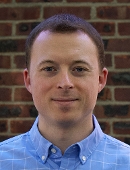
Alan C Seifert, PhD
About Me
Alan C. Seifert, Ph.D. is an Assistant Professor of Radiology in the Biomedical Engineering and Imaging Institute (BMEII), Scientific Director of the BMEII Imaging Core, and Co-Director of the Artificial Intelligence and Emerging Technologies (AIET) concentration at the Graduate School of Biomedical Sciences at the Icahn School of Medicine at Mount Sinai.
Dr. Seifert is a biomedical engineer with a background in both imaging physics and medical science. He received a B.S. in Biomedical Engineering from Johns Hopkins University, completed the preclinical medical school curriculum and a Ph.D. in Bioengineering under the mentorship of Prof. Felix Wehrli at the University of Pennsylvania, and trained as a postdoctoral fellow at Mount Sinai under Prof. Junqian Xu.
The central theme of his research is to identify biologically relevant magnetic resonance imaging (MRI) signals that are particularly challenging to detect, and develop imaging techniques and hardware that can quantify these signals, thus providing new and clinically valuable imaging biomarkers. His current work is focused on advancing our understanding of the structure and composition of neural tissue and mechanisms of injury and disease in the nervous system.
Selected Representative Publications
1. Selmanovic E, Seifert AC, Delman BN, Pruyser A, Thorn EL, Nolan AL, Keene CD, Walker JM, Crary JF, Hof PR, Folkerth R, Dams-O’Connor K. Chronic traumatic encephalopathy neuropathologic change in the Late Effects of Traumatic Brain Injury project: Findings in a community autopsy cohort. Journal of Neuropathology and Experimental Neurology, 2025 Oct 18;nlaf117. doi: 10.1093/jnen/nlaf117.
2. Alonso-Ortiz E, Papp D, Barry RL, Poëti K, Seifert AC, Gilbert KM, Lopez-Rios N, Paska J, Eippert F, Weiskopf N, Beghini L, Graedel N, Trampel R, Callaghan MF, Aigner CS, Freund P, Seif M, Destruel A, Callot V, Vannesjo J, Cohen-Adad J. Multi-center benchmarking of cervical spinal cord RF coil for 7 T MRI: A traveling spines study. Magnetic Resonance in Medicine 2025 Sep;94(3):1339-1355. doi: 10.1002/mrm.30551.
3. Seifert AC, Xu J, Kong Y, Eippert F, Miller KL, Tracey I, Vannesjo SJ. Thermal stimulus task fMRI in the cervical spinal cord at 7 Tesla. Human Brain Mapping 2024;45(3):e26597.
4. Troxel AB, Bind M-AC, Flotte TJ, Cordon-Cardo C, Decker LA, Finn AV, Padera RF, Reichard RR, Stone JR, Adolphi NL, Casimero FVC, Crary JF, Elifritz J, Faustin A, Ghosh SKB, Krausert A, Martinez-Lage M, Melamed J, Mitchell RA, Sampson BA, Seifert AC, Simsir A, Adams C, Haasnoot S, Hafner S, Siciliano MA, Vallejos BB, Del Boccio P, Lamendola-Essel MF, Young CE, Kewlani D, Akinbo PA, Parent B, Chung A, Cato TC, Mudumbi PC, Esquenazi-Karonika S, Wood MJ, Chan J, Monteiro J, Shinnick DJ, Thaweethai T, Nguyen AN,Fitzgerald ML, Perlowski AA, Stiles LE, Paskett ML, Katz SD, Foulkes AS, on behalf of the RECOVER Initiative Autopsy Group. Researching COVID to enhance recovery (RECOVER) tissue pathology study protocol: Rationale, objectives, and design. PLoS One. 2024 Jan 10;19(1):e0285645.
5. Dams-O’Connor K, Seifert AC, Crary JF, Delman BN, Del Bigio MR, Kovacs GG, Lee EB, Nolan AL, Pruyser A, Selmanovic E, Stewart W, Woodoff-Leith E, Folkerth RD. The neuropathology of intimate partner violence. Acta Neuropathologica 2023 Dec;146(6):803-815.
6. Alipour A, Seifert AC, Delman BN, Hof PR, Fayad ZA, Balchandani P. Enhancing the brain MRI at ultra-high field systems using a meta-array structure. Medical Physics 2023 Oct 24, 2023 Dec;50(12):7606-7618.
7. McKenzie AT, Woodoff-Leith E, Dangoor D, Cervera A, Ressler HW, Whitney K, Dams-O’Connor K, Wu Z, Hillman EMC, Seifert AC, Crary JF. Ex situ perfusion fixation for brain banking: a technical report. Free Neuropathology 2022;3:22.
8. Seifert AC, Xu J. Impact of autocalibration method on accelerated echo-planar imaging of the cervical spinal cord at 7T. Magnetic Resonance in Medicine 2022;88(6):2583-2591.
9. Stram MN†, Seifert AC†, Cortes E, Akyatan A, Woodoff-Leith E, Borukhov V, Tetlow A, Altemni D, Greenberg M, Gupta A, Krausert A, Mecca L, Rodriguez S, Stahl-Herz J, Guzman M, Delman B, Crary JF, Dams-O’Connor K†, Folkerth RD†. Neuropathology of pediatric SARS-CoV-2 infection in the forensic setting: novel application of ex vivo imaging in analysis of brain microvasculature. Frontiers in Neurology 2022:13:894565. †Authors contributed equally.
10. Cohen-Adad J, Alonso-Ortiz E, Alley S, Lagana MM, Baglio F, Vannesjo SJ, Karbasforoushan H, Seif M, Seifert AC, Xu J, Kim J-W, Labounek R, Vojtisek L, Dostal M, Valosek J, Samson RS, Grussu F, Battiston M, Gandini Wheeler-Kingshott CAM, Yiannakas MC, Gilbert G, Schneider T, Johnson B, Prados F. Comparison of multi-center MR protocols for visualizing the spinal cord gray matter. Magnetic Resonance in Medicine, 2022 Aug;88(2):849-859.
11. Alipour A, Seifert AC, Delman BN, Robson PM, Adriany G, Balchandani P. Improvement of Magnetic Resonance Imaging Using a Wireless Radiofrequency Resonator Array. Scientific Reports, 2021 Nov 29;11(1):23034.
12. Seifert AC, Umphlett M, Hefti M, Fowkes M, Xu J. Formalin Tissue Fixation Biases Myelin-Sensitive MRI. Magnetic Resonance in Medicine, 2019;82(4):1504-1517.
13. Seifert AC†, Li C†, Wilhelm MJ, Wehrli SL, Wehrli FW. Towards Quantification of Myelin by Solid-State MRI of the Lipid Matrix Protons. NeuroImage, 2017;163:358-367. †Authors contributed equally.
14. Zhang B†, SeifertAC†, Kim JW, Borrello J, Xu J. 7 Tesla 22-Channel Wrap-Around Coil Array for Cervical Spinal Cord and Brainstem Imaging. Magnetic Resonance in Medicine, 2017;78(4):1623-1634. †Authors contributed equally.
15. Seifert AC, Li C, Rajapakse CS, Bashoor-Zadeh M, Bhagat YA, Wright AC, Zemel BS, Zavaliangos A, Wehrli FW. Bone Mineral 31P and Matrix-Bound Water Densities Measured by Solid-State 1H and 31P MRI. NMR in Biomedicine, 2014;27(7):739-748.
Language
English
Position
ASSISTANT PROFESSOR | Diagnostic, Molecular and Interventional Radiology, ASSISTANT PROFESSOR | Graduate Education, ASSISTANT PROFESSOR | Artificial Intelligence and Human Health
Research Topics
Biomechanics/Bioengineering, Biomedical Sciences, Biophysics, Brain Imaging, Imaging, Magnetic Resonance Imaging, Myelination, Pain, Spinal Cord
Multi-Disciplinary Training Areas
Artificial Intelligence and Emerging Technologies in Medicine [AIET], Neuroscience [NEU]
Education
BS, Johns Hopkins University
PhD, University of Pennsylvania
Postdoc, Icahn School of Medicine at Mount Sinai
Awards
2025
Dean's Team Science Award, Finalist, ISMMS
2023
Distinguished Scholar Award, Runner Up, ISMMS
2019
Junior Fellow of the International Society for Magnetic Resonance in Medicine
2017
NINDS Career Development Award (NIH K01)
2016
The Lodwick Award, Massachusetts General Hospital, Department of Radiology, 2016 Division of Musculoskeletal Imaging & Intervention
Research
MRI is an extremely valuable 3D non-destructive method for investigation of post-mortem tissue. Multiple pulse sequences can provide information on microstructural integrity of white matter, myelination, edema, infarction, and hemorrhage throughout the entire brain at high spatial resolution. However, MRI cannot yet deliver the level of microscopic detail and specificity that histology can provide. Although histology provides incredibly detailed and specific information on a microscopic level, this information is only available in tissue that is selected a priori for sectioning and staining. It is therefore very likely that sectioning and visual examination will fail to sample all abnormal regions in the brain, particularly small microhemorrhages or microinfarctions that are smaller than several millimeters. The integration of MRI and histology methods can combine the sensitivity of whole-brain 3D imaging with the specificity and detail of histopathological analysis. This renders the unification of MRI and histology more effective than the sum of the two methods in isolation. We are applying these complementary methods in studies of the neurological post-acute sequelae of COVID-19 infection, traumatic brain injury, and fundamental neuroanatomy.
Publications
Selected Publications
- Raloxifene injections normalize age-related mechanical sensitization in female and male mice and augment intervertebral disc structure in old female mice. Neharika Bhadouria, Jonathan J. Huang, Janai Augustin, Bowen Wang, Joana I. Almeida, Tori Kroon, James Manolis, Michael Lemonick, Alan Seifert, Deepak Vashishth, James C. Iatridis, Nilsson Holguin. Osteoarthritis and Cartilage
- Intradiscal Cutibacterium acnes Sustains Modic Type 1-Like Lesions Over Time in a Rat Lumbar Endplate Injury Model. Irina Heggli, Alon Lai, Denise Iliff, Marco D. Burkhard, Niklas Koehne, Harsev Singh, Jonathan J. Huang, Alan C. Seifert, Damien Laudier, Noah Bonnheim, Levon Rodriguez, Timothy D. Jacobsen, James C. Iatridis. JOR Spine
- Chronic traumatic encephalopathy neuropathologic change in the Late Effects of Traumatic Brain Injury project: Findings in a community autopsy cohort. Enna Selmanovic, Alan C. Seifert, Bradley N. Delman, Ariel Pruyser, Emma L. Thorn, Amber L. Nolan, C. Dirk Keene, Jamie M. Walker, John F. Crary, Patrick R. Hof, Rebecca D. Folkerth, Kristen Dams-O’Connor. Journal of Neuropathology and Experimental Neurology
Industry Relationships
Physicians and scientists on the faculty of the Icahn School of Medicine at Mount Sinai often interact with pharmaceutical, device, biotechnology companies, and other outside entities to improve patient care, develop new therapies and achieve scientific breakthroughs. In order to promote an ethical and transparent environment for conducting research, providing clinical care and teaching, Mount Sinai requires that salaried faculty inform the School of their outside financial relationships.
Dr. Seifert has not yet completed reporting of industry relationships or has no industry relationships to report.
Mount Sinai’s faculty policies relating to faculty collaboration with industry are posted on our website. Patients may wish to ask their physician about the activities they perform for companies.