
Publications:109
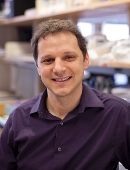
Andrew J Sharp, PhD
About Me
Mar 2010 - present – Associate Professor, Department of Genetics and Genomics and Icahn Genomics Institute, Mount Sinai School of Medicine, New York, USA
October 2007 - March 2010: Marie Curie Fellow in laboratory of Stylianos Antonarakis, Department of Genetic Medicine, University of Geneva, Switzerland
January 2004 - September 2007: Senior Fellow in laboratory of Evan Eichler, Department of Genome Sciences, University of Washington, Seattle. Studying structural variation of the human genome and genomic disorders
October 2002 - December 2003: Research Assistant, Wessex Regional Genetics Laboratory, Salisbury, UK
September 1997 - September 2002: PhD Student, University of Southampton, England. Supervisor Prof. Patricia Jacobs. Thesis entitled ‘Molecular Studies of X Chromosome Inactivation in Humans’, Division of Human Genetics,
January 1997 - October 1999: Research Technician, Wessex Regional Genetics Laboratory, Salisbury, UK
Language
English
Position
PROFESSOR | Genetics and Genomic Sciences
Research Topics
Alzheimer's Disease, Bioinformatics, Epigenetics, Gene Expressions, Gene Regulation, Genetics, Genomics, Microarray, Multiple Sclerosis
Multi-Disciplinary Training Areas
Genetics and Genomic Sciences [GGS]
Education
BSc, University of Exeter
PhD, University of Southampton
Awards
2009
Young Investigator Award for Outstanding Science
European Society of Human Genetics
2006
Trainee Award (postdoctoral)
American Society of Human Genetics
2002
Trainee Award (predoctoral)
American Society of Human Genetics
Research
The Sharp lab is an integrated research environment combining both experimental and bioinformatic approaches. My research uses genomic approaches to study the human genome and disease, utilizing a strategy that can be described as 'reverse genetics'. The theory behind this idea is that rather than studying a specific condition, we use a bottom-up approach using high-throughput techniques to study various aspects of the human genome, and then link these observations to different diseases.
My lab therefore performs global analyses of structural variation, epigenetics, and gene expression combining innovative experimental and bioinformatic approaches. We use both wet lab technologies such as DNA microarrays and high-massively parallel sequencing in addition to performing computational analyses of the human genome, and large datasets produced by high-throughput technologies.
What can this approach do? During my postdoctoral work, I developed custom microarrays to study structural variation of the human genome. By first analyzing the human genome computationally, we identified regions that had a structure that suggested they might render them unstable and prone to frequent rearrangement. By focusing our studies on these regions, we were then able to identify many new genetic syndromes that together account for ~2% of cases of mental retardation worldwide, and also act as susceptibility factors for autism, schizophrenia and diabetes. One also represents the most common genetic risk factor for epilepsy identified to date.
More recently we have developed genome-wide technologies for analyzing DNA methylation, an epigenetic modification that controls how genes are switched on and off. By comparing methylation patterns in healthy and diseased patients, we can discover what parts of the genome regulate patterns of gene expression, hence identifying the important functional elements that are now excellent candidates for human disease. Other projects I am developing seek to study the role of tandem repeat DNA in the human genome, utilize patterns of gene expression as a tool to uncover genes regulating human phenotypes, and investigate epigenetic changes in diseases including multiple sclerosis, Alzheimer's disease, and neural tube defects.
My work has been published repeatedly in top journals such as Nature Genetics and The New England Journal of Medicine. I also have the unique achievement of receiving the Young Investigator Award for Outstanding Science from the European Society of Human Genetics, and the Trainee Award from the American Society of Human Genetics on two different occasions.
I am a co-Director of the Graduate Program in Genetics and Genomic Sciences, and also course director for two graduate courses: BSR2400, a 2-credit course entitled “Translational Genomics” that gives an overview of diverse topics in modern genetics/genomics, and BSR4401, the “Genetics andGenomics Journal Club”.
I welcome the opportunity to teach bright students with an interest in learning novel approaches to the study of the human genome. I can offer a diverse environment and the opportunity to gain exposure to many productive and innovative areas of research in human genetics and genomics. Computational skills are a definite advantage, but are not required. If you are interested in learning more about my research please contact me at andrew.sharp@mssm.edu
Publications
Selected Publications
- Genetic modifiers of APOE-ε4-associated cognitive decline. Alex G. Contreras, Skylar Walters, Jaclyn M. Eissman, Derek B. Archer, Alexandra N. Regelson, Alaina Durant, Michelle Clifton, Subhabrata Mukherjee, Michael L. Lee, Seo Eun Choi, Phoebe Scollard, Emily H. Trittschuh, Jesse Mez, William S. Bush, Brian W. Kunkle, Carlos Cruchaga, Adam C. Naj, Katherine A. Gifford, Murat Bilgel, Amanda B. Kuzma, Balebail Ashok Raj, Kristin Fargher, Amanda Smith, Lisa Raudin, Gloria Chaing, Norman Relkin, Karen Elizabeth Smith, Hyungsub Shim, Laura L.Boles Ponto, Susan K. Schultz, Antero Sarrael, Raymundo Hernando, Nunzio Pomara, Dick Drost, Irina Rachinsky, Stephen Pasternak, Elizabether Finger, David Bachman, Kenneth Spicer, Hillel Grossman, Mary Sano, Brian Fulton-Howard, Alison M. Goate, Joseph D. Buxbaum, Ricardo Vialle, Andrew Sharp, Alan Renton, Towfique Raj, Jack Humphrey, Shea Andrews. Nature Communications
- A phenome-wide association study of CNVs genotyped from genome sequencing read depth in the UK Biobank. Paras Garg, Bharati Jadhav, Mariya Shadrina, Alejandro Martin-Trujillo, Andrew J. Sharp. American Journal of Human Genetics
- An African ancestry-enriched H1 sub-haplotype challenges MAPT haplotype assignment and reveals distinct tau regulatory programs. Sarah A. Weitzman, Joshua Orrick, Brian Fulton-Howard, Alan E. Renton, Maya Fridrikh, Justin McKetney, Gary Dixon, Le Qi, Charlotte Labrie-Cleary, Liara Rizzi, Claudia K. Suemoto, Renata E. Paraizo Leite, Andrew J. Sharp, Paras Garg, Daniel H. Geschwind, Martin Kampmann, Lea Grinberg, Danielle L. Swaney, Kathryn R. Bowles, Alison M. Goate, Chiara Pedicone. Neuron
Industry Relationships
Physicians and scientists on the faculty of the Icahn School of Medicine at Mount Sinai often interact with pharmaceutical, device, biotechnology companies, and other outside entities to improve patient care, develop new therapies and achieve scientific breakthroughs. In order to promote an ethical and transparent environment for conducting research, providing clinical care and teaching, Mount Sinai requires that salaried faculty inform the School of their outside financial relationships.
Below are financial relationships with industry reported by Dr. Sharp during 2025 and/or 2026. Please note that this information may differ from information posted on corporate sites due to timing or classification differences.
Consulting or Other Professional Services
Examples include, but are not limited to, committee participation, data safety monitoring board (DSMB) membership- Gerson Lehrman Group
- Guidepoint Global, LLC.
- Coleman Research Group
- Dearfield Research
Mount Sinai’s faculty policies relating to faculty collaboration with industry are posted on our website. Patients may wish to ask their physician about the activities they perform for companies.