
Publications:31
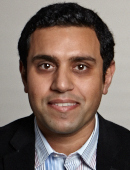
Arvin Dar, PhD
About Me
Arvin Dar is a Professor in the Departments of Oncological Sciences and Pharmacological Sciences at the Icahn School of Medicine at Mount Sinai, NYC. He is also the Associate Director of the Mount Sinai Center for Therapeutic Discovery and a member of the Tisch Cancer Institute (TCI). Dr. Dar’s research is focused on the integration of genetics and small molecule chemistry to uncover basic principles of signal transduction, with applications in tool development and therapeutics. His laboratory has been researching and developing kinase inhibitors and other small molecule approaches for the treatment of cancer and neurological disorders. Dr. Dar has received numerous awards and honors, including the NIH Director’s New Innovator Award, Damon-Runyon Rachleff Innovation Award, the Pew Charitable Trusts Pew-Stewart Scholarship for Cancer Research, Pershing Square Sohn Cancer Research Alliance Award, Junior Faculty Award at Mount Sinai, Friedman Brain Institute Scholar Award, and the Mark Foundation for Cancer Research Aspire Award.
Language
English
Position
ADJUNCT PROFESSOR | Pharmacological Sciences, ADJUNCT PROFESSOR | Oncological Sciences
Education
B.Sc., University of Western Ontario
Ph.D., University of Toronto
Postdoctoral Training, University of California, San Francisco
Awards
2020
The Mark Foundation for Cancer Research ASPIRE Award
The Mark Foundation for Cancer Research
2018
Friedman Brain Institute Research Scholar
Friedman Brain Institute
2015
Pershing Square Sohn Prize for Young Investigators (PSSCRA)
Pershing Square
2014
Damon Runyon-Rachleff Innovation Award
Damon Runyon Cancer Research Foundation
2014
Pew-Stewart Scholar for Cancer Research
The Pew and Alexander and Margaret Stewart Charitable Trusts
2013
NIH Director’s New Innovator Award
National Institute of Health
2012
UCSF Dean's Postdoctoral Prize
UCSF
2012
Tisch Cancer Institute Developmental Fund Award
2006
BCRP Multidisciplinary Postdoctoral Award
US Department of Defense
2003
Canadian Graduate Scholarship
Canadian Institutes for Health Research
Research
Through the development and understanding of small molecules, our lab explores links between the regulation of drug targets and the system level properties of biological networks within cells and animals. Our goals are to create new tools to modulate and explore biomolecular function, with a long-term objective of developing innovative medicines for disease. Our work is highly interdisciplinary, employing methods from synthetic organic chemistry, X-ray crystallography, mass spectrometry, informatics, biochemistry and model organism genetics.
In one research area we are investigating one of the most frequently activated pathways in cancer biology: the Ras-Mitogen Activated Protein Kinase (MAPK) pathway. Oncogenic forms of Ras occur in over 20% of all cancers. These mutants have stifled direct pharmacological approaches and inhibitors for the direct effectors of Ras have shown limited or no efficacy in patients. We are exploring new targets or strategies to modulate the Ras pathway through the development of chemical tools. In particular, we are using target-based and systems pharmacology approaches to generate new classes of small molecule modulators for the Ras pathway.
Postdoctoral Fellows: Alex Scopton, Zaigham Khan, Jayasudhan Yerabolu
Current Students: Jia (Annie) Yu, Ryan Smith, Alexander Real, Arthur Chow
Research Assistant: Lisa Silber
Publications
Selected Publications
- Contemporary design of small-molecule kinase modulators: orthosteric, allosteric and induced-proximity strategies. Joachim Rudolph, Klaus P. Hoeflich, Arvin C. Dar. Nature Reviews Drug Discovery
- An appendiceal cancer organoid biobank identifies phenotypic evolution and druggable dependencies of peritoneal carcinomatosis. Ahmed Mahmoud, Christine Sukhwa, Michael Giarrizzo, Philip H. Choi, Jura Pintar, Henry Walch, Nan Zhao, Jonathan Bermeo, Sebastian Chung, Manisha Raghavan, Samhita Bapat, Qingwen Jiang, Julia Meredith, Canan Firat, Andrea Cercek, Michael B. Foote, Nikolaus Schultz, Walid K. Chatila, Garrett M. Nash, Jinru Shia, Francisco Sanchez-Vega, Steven Larson, Arvin C. Dar, Neal Rosen, Georgios Karagkounis, Karuna Ganesh. Developmental Cell
- Disrupted molecular glue complex drives RAS inhibitor resistance. Ben Sang, Ling Feng Ye, Zheng Fu, Yasin Pourfarjam, Antonio Cuevas-Navarro, Shijie Fan, Feng Hu, Aaliyah Washington, Diego J. Rodriguez, Alberto Vides, Sumit Kar, Ethan Ahler, Kevin K. Lin, Aparna Hegde, Jacqueline A.M. Smith, Brian M. Wolpin, Salman R. Punekar, Alexander I. Spira, Ignacio Garrido-Laguna, David S. Hong, Arvin C. Dar, Rona Yaeger, Kathryn C. Arbour, Piro Lito. Cell
Industry Relationships
Physicians and scientists on the faculty of the Icahn School of Medicine at Mount Sinai often interact with pharmaceutical, device, biotechnology companies, and other outside entities to improve patient care, develop new therapies and achieve scientific breakthroughs. In order to promote an ethical and transparent environment for conducting research, providing clinical care and teaching, Mount Sinai requires that salaried faculty inform the School of their outside financial relationships.
Dr. Dar has not yet completed reporting of industry relationships or has no industry relationships to report.
Mount Sinai’s faculty policies relating to faculty collaboration with industry are posted on our website. Patients may wish to ask their physician about the activities they perform for companies.