
Publications:36
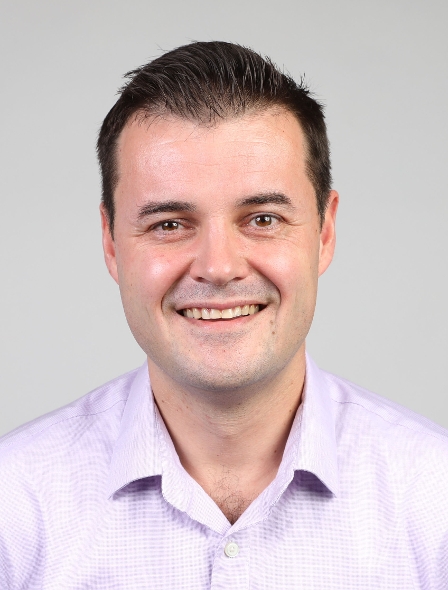
Christopher Sturgeon, PhD
About Me
The goal of my research is to understand how the hematopoietic system develops during embryogenesis. I am particularly fascinated by the role transient developmental programs play in establishing lifelong hematopoiesis, and the heterogeneity found within these cells. I obtain these insights by studying gene expression during both murine embryonic development and the directed differentiation of pluripotent stem cells. Through this, I aim to develop a reliable and robust method to generate hematopoietic stem and progenitor cells from human pluripotent stem cells, a major goal for regenerative medicine. I have developed novel stem cell differentiation approaches to uncover the mechanisms regulating hematopoietic specification. This ultimately led to my demonstration of a pivotal role for WNT and ACTIVIN signaling in the specification of different hematopoietic progenitors from human pluripotent stem cells, which also serves as the underlying scientific premise to my ongoing research. Further, I was able to use this system to demonstrate the mechanistic basis for human definitive hematopoietic specification via CDX4, establish a tractable platform for the study of dyskeratosis congenita and its progression to bone marrow failure and leukemia, and uncover the potential of embryonic hematopoietic programs to give rise to potently cytotoxic natural killer cells. I now aim, in my research at Mount Sinai, to leverage this system for disease modeling, a source of novel adoptive immunotherapy cell products, and to understand human hematopoietic development. For more information, please visit http://www.sturgeonlab.com
Language
English
Position
ASSOCIATE PROFESSOR | Stem Cell Biology And Regenerative Medicine, ASSOCIATE PROFESSOR | Medicine, Hematology and Medical Oncology
Research Topics
Blood, Cell Biology, Cellular Differentiation, Cytokines, Developmental Biology, Differentiation, Hematopoiesis, Induced pluripotent stem cells, Macrophage, Signal Transduction, Stem Cells, Tissue Engineering
Multi-Disciplinary Training Areas
Development Regeneration and Stem Cells [DRS]
Education
BSc(H), Carleton University
PhD, University of British Columbia
Postdoc, University of Toronto
Awards
2016
Joanne Levy Award
American Society of Hematology
2016
Scholar Award
American Society of Hematology
2007
McEwen/McMurrich Regenerative Medicine Postdoctoral Fellowship
McEwen Centre for Regenerative Medicine
2005
Roman M. Babicki Scholarship
University of British Columbia
2003
NSERC PGS-B Scholarship
NSERC
2001
NSERC PGA-A Scholarship
NSERC
Research
The directed differentiation of human pluripotent stem cells (hPSC) towards the hematopoietic lineages would be an invaluable tool for regenerative medicine, providing cells for both transplantation and in vitro analysis. As the PSC system has been shown to recapitulate developmental events in vitro, it is also a powerful model system for developmental biology, being the only method to-date that allows interrogation of the cellular and molecular mechanisms that regulate human development. Furthermore, the recent technological advancement to generate induced pluripotent stem cells offers the potential to model not only development, but also disease in a dish.
Current efforts to generate an hPSC-derived hematopoietic stem cell (HSC) are plagued by an inability to accurately discriminate between progenitors of the primitive and definitive hematopoietic programs, as there is no anatomical separation between the two in vitro. Briefly, very early in embryonic development the primitive hematopoietic program gives rise to a subset of lineages, including unique erythroblasts with high oxygen-affinity hemoglobin to promote embryonic survival, but no T cells or hematopoietic stem cells. This program is transient, and is shut down prior to the intra-embryonic emergence of the definitive hematopoietic program, which generates the full spectrum of hematopoietic lineages, including T cells and the hematopoietic stem cell. Both programs appear to progress in a similar fashion, passing through a mesodermal precursor and then subsequent hemogenic endothelium. However, as only the definitive program gives rise to a bona fide HSC, understanding the mechanism(s) that control specification of this program are essential to achieving this goal.
The focus of my lab is to elucidate the signaling pathways governing the specification of both hematopoietic programs using hPSC directed differentiation. Through this we aim to better understand the transcriptional and epigenetic regulation that controls HSC development, and identify method(s) to specify a transplantable HSC in the dish. Work in my laboratory is focused on three main objectives:
Understanding human primitive and definitive hematopoietic development
Understanding the endothelial-to-hematopoietic transition in hemogenic endothelium, ultimately giving rise to an HSC
Modeling hematopoietic disease with iPSCPlease visit www.sturgeonlab.com for more information
Publications
Selected Publications
- Retinoic acid regulates the development of human definitive hematopoiesis in a non-cell-autonomous manner. Nestor A. Fernandez, Lauren J. Durland, Analucia Garcia, Michael H. Atkins, Marion Kennedy, Christopher M. Sturgeon, Gordon Keller. Development (Cambridge)
- Ontogeny Dictates Oncogenic Potential, Lineage Hierarchy, and Therapy Response in Pediatric Leukemia. Ke Wang, Shayan Saniei, Nikita Poddar, Isabella G. Martinez, Clifford Chao, Subrina Autar, Persephone Fiore, Saul Carcamo, Meghana Sreenath, Jack H. Peplinski, Rhonda E. Ries, Anna Huo Chang Mei, Noshin Azra Rahman, Levan Mekerishvili, Miguel Quijada-álamo, Grace Freed, Mimi Zhang, Katherine Lachman, Zayna Diaz, Manuel M. Gonzalez, Jing Zhang, Giang Pham, Dan Filipescu, Mirela Berisa, Tommaso Balestra, Noelle Wheeler, Julie A. Reisz, Angelo D. Alessandro, Daniel J. Puleston, Emily Bernstein, Jerry E. Chipuk, Mark Wunderlich, Sarah K. Tasian, Bridget K. Marcellino, Ian A. Glass, Christopher M. Sturgeon, Dan A. Landau, Zhihong Chen, Eirini P. Papapetrou, Franco Izzo, Soheil Meshinchi, Dan Hasson, Elvin Wagenblast. Cancer Discovery
- Bloodhounds chasing the origin of blood cells. Lauren N. Randolph, Claudia Castiglioni, Manuela Tavian, Christopher M. Sturgeon, Andrea Ditadi. Trends in Cell Biology
Industry Relationships
Physicians and scientists on the faculty of the Icahn School of Medicine at Mount Sinai often interact with pharmaceutical, device, biotechnology companies, and other outside entities to improve patient care, develop new therapies and achieve scientific breakthroughs. In order to promote an ethical and transparent environment for conducting research, providing clinical care and teaching, Mount Sinai requires that salaried faculty inform the School of their outside financial relationships.
Dr. Sturgeon has not yet completed reporting of industry relationships or has no industry relationships to report.
Mount Sinai’s faculty policies relating to faculty collaboration with industry are posted on our website. Patients may wish to ask their physician about the activities they perform for companies.