
Publications:110
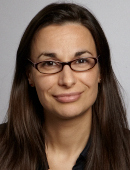
Dalila C Pinto, PhD
About Me
Dr. Pinto is a tenured Associate Professor of Psychiatry, Genetics and Genomic Sciences, and a faculty member of the Mindich Child Health and Development Institute, the Seaver Autism Center, the Friedman Brain Institute, and the Icahn Genomics Institute. Dr. Pinto’s laboratory focuses on identifying genes and biological pathways involved in various neurodevelopmental disorders, including autism, intellectual disability, epilepsy, and rett syndrome-like phenotypes. Dr. Pinto integrates various forms of genetic variation (deletions, duplications, indels, single-point mutations), with gene expression, epigenetics and clinical data, using a combination of innovative high-throughput experimental and bioinformatics approaches, that altogether could implicate novel risk factors and provide insights into the mechanisms underlying these disorders. Dr. Pinto’s laboratory also works with worldwide clinical collaborators that are responsible for patients and families recruitment and phenotypic examination.
Language
English
Position
ASSOCIATE PROFESSOR | Psychiatry, ASSOCIATE PROFESSOR | Genetics and Genomic Sciences
Research Topics
Autism, Bioinformatics, Computational Biology, Epilepsy, Gene Expressions, Gene Regulation, Genetics, Genomics, Human Genetics and Genetic Disorders, RNA
Multi-Disciplinary Training Areas
Artificial Intelligence and Emerging Technologies in Medicine [AIET], Genetics and Genomic Sciences [GGS], Neuroscience [NEU]
Education
M.Sc, M.Sc, University of Porto
Ph.D., University of Utrecht
Postdoctoral, Hospital for Sick Children Toronto
Research
Publications
Selected Publications
- Three immunoregulatory signatures define non-productive HIV infection in stem cell memory CD4<sup>+</sup> T cells. Giacomo M. Butta, Bremy Alburquerque, Charlotte Kearns, Yoav Hadas, Max W. VanDyck, Susanna Scaglioni, Noah Peña, Hoi Tong Wong, Elizabeth Levendosky, Charles Gleason, Xiao Lin, Lara Manganaro, Dalila Pinto, Lubbertus C.F. Mulder, Viviana Simon. Nature Communications
- Genomic meta-analyses of binge-eating behavior and anorexia nervosa yield insights into the unique and shared biology of eating disorder phenotypes. Jet D. Termorshuizen, Helena L. Davies, Sang Hyuck Lee, Jessica K. Dennis, Christopher Hübel, Jessica S. Johnson, Yi Lu, Melissa A. Munn-Chernoff, Triinu Peters, Baiyu Qi, Katherine E. Schaumberg, Rebecca H. Signer, Karanvir Singh, Abigail R. ter Kuile, Laura M. Thornton, Jiayi Xu, Shuyang Yao, Zeynep Yilmaz, Ruyue Zhang, Johan Zvrskovec, Mohamed Abdulkadir, Ziada Ayorech, Elizabeth C. Corfield, Alexandra Havdahl, Kristi Krebs, Taralynn M. Mack, Maria Niarchou, Teemu Palviainen, Julia M. Sealock, Jessica H. Baker, Andrew W. Bergen, Andreas Birgegård, Vesna Boraska Perica, Katharina Bühren, Roland Burghardt, Matteo Cassina, Giovanni Castellini, Enrico Collantoni, James J. Crowley, Unna N. Danner, Franziska Degenhardt, Janiece E. DeSocio, Christian Dina, Monika Dmitrzak-Węglarz, Laramie E. Duncan, Karin M. Egberts, Lenka Foretova, Dalila Pinto, Nadia Micali, Laura M. Huckins. Nature Mental Health
- Leveraging transdiagnostic genetic liability to psychiatric disorders to dissect clinical outcomes of anorexia nervosa. Zheng An Lu, Alexander Ploner, Andreas Birgegård, Sarah L. Maguire, Stephan Zipfel, Eleftheria Zeggini, D. Blake Woodside, H. Erich Wichmann, Thomas Werge, Hunna J. Watson, Tracey D. Wade, Annemarie van Elburg, Konstantinos Tziouvas, Artemis Tsitsika, Federica Tozzi, Alfonso Tortorella, Friederike I. Tam, Beata Świątkowska, Garret D. Stuber, Michael Strober, Vidar W. Steen, Nicole Soranzo, Agnieszka Slopien, Marta Tyszkiewicz-Nwafor, Eric F. van Furth, Margarita C.T. Slof-Op’t, Lenka Slachtova, Alexandra Schosser, Nicholas J. Schork, Janet Treasure, Ulrike Schmidt, Stephen W. Scherer, André Scherag, Paolo Santonastaso, Filip Rybakowski, Alessandro Rotondo, Stephan Ripke, Samuli Ripatti, Valdo Ricca, Ted Reichborn-Kjennerud, Anu Raevuori, John F. Pearson, Jacques Pantel, Aarno Palotie, Julie O’Toole, Nadia Micali, Dalila Pinto, Laura M. Huckins, Jessica S. Johnson, Jiayi Xu. Molecular Psychiatry
Industry Relationships
Physicians and scientists on the faculty of the Icahn School of Medicine at Mount Sinai often interact with pharmaceutical, device, biotechnology companies, and other outside entities to improve patient care, develop new therapies and achieve scientific breakthroughs. In order to promote an ethical and transparent environment for conducting research, providing clinical care and teaching, Mount Sinai requires that salaried faculty inform the School of their outside financial relationships.
Dr. Pinto has not yet completed reporting of industry relationships or has no industry relationships to report.
Mount Sinai’s faculty policies relating to faculty collaboration with industry are posted on our website. Patients may wish to ask their physician about the activities they perform for companies.