
Publications:88
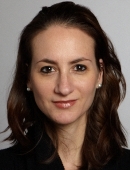
Emily Bernstein, PhD
About Me
Emily Bernstein, PhD, is Professor and Vice Chair of the Department of Oncological Sciences at the Icahn School of Medicine at Mount Sinai. Dr. Bernstein is also Co-leader of the Cancer Mechanisms Research Program at the Mount Sinai Tisch Cancer Center. As such, Dr. Bernstein facilitates basic research on genetic, epigenetic, biochemical, and developmental pathways that drive cancer initiation and progression, and fosters intra- and inter-program collaborations that accelerate the development of novel, targeted therapies for cancer.
Dr. Bernstein’s laboratory studies the epigenetic regulation of gene expression in cancer and development, with the long-term goal of understanding the chromatin changes that take place at the molecular level during the transformation process of normal cells to cancer cells. Her team studies melanoma skin cancer, and pediatric cancers such as neuroblastoma.
Dr. Bernstein teaches courses on cancer biology and serves on numerous PhD thesis committees at the Icahn School of Medicine at Mount Sinai. She served as a member of the Cancer Genetics Study Section of the NIH Center for Scientific Review, serves as a standing reviewer for multiple research grant foundations and is an Associate Editor for the journal Science Advances.
Language
English
Position
PROFESSOR | Oncological Sciences, PROFESSOR | Stem Cell Biology And Regenerative Medicine, PROFESSOR | Dermatology
Research Topics
Cancer, Chromatin, Epigenetics, Gene Regulation, Molecular Biology, Stem Cells
Multi-Disciplinary Training Areas
Cancer Biology [CAB], Development Regeneration and Stem Cells [DRS]
Education
Ph.D., SUNY Stony Brook/Cold Spring Harbor Laboratory
, The Rockefeller University
Awards
2020
Faculty Council Award for Academic Excellence by a Senior Faculty member
Icahn School of Medicine at Mount Sinai
2019
4D Technology Development Program
Mount Sinai Innovation Award
2017
Commencement 2017 Honoree, Graduate Student Marshal
Icahn School of Medicine at Mount Sinai
2015
Established Investigator Award
Melanoma Research Alliance
2014
Young Investigators in Cancer Research
Pershing Square Sohn Prize
2012
Outstanding Mentorship Award
Mount Sinai Graduate School
2012
Young Cancer Scientist Research Award
JJR Foundation
2012
Developmental Fund Award
The Tisch Cancer Institute at Mount Sinai
2011
The Dr. Harold and Golden Lamport Research Award
Icahn School of Medicine at Mount Sinai
2010
Tisch Cancer Institute Developmental Funds Award
Icahn School of Medicine at Mount Sinai
2008
New Scholar Award
Ellison Medical Foundation
2008
Scholar Award
American Skin Association Research
2004
Postdoctoral Fellowship
National Science Foundation
Research Award
Irma T. Hirschl Charitable Trust
Research
Summary of Current Research
Our focus is on epigenetic regulation of gene expression in multiple biological pathways including cancer (melanoma, breast cancer, neuroblastoma), cellular senescence and stem cell biology. We have a strong research focus on histone variants and their dedicated chaperones, chromatin remodelers, and histone modifying enzymes, which are all frequently altered in cancer.
Chromatin is the complex of DNA and its intimately associated proteins - with histones constituting the major component. This template is an attractive candidate for shaping the features of a cell's epigenetic landscape. Disruption of a cell's epigenetic balance can perturb chromatin structure and gene regulation, contributing to disease states. There is a growing interest both in academia and industry to target the machinery that regulate chromatin dynamics, and this burgeoning field is of great interest to our laboratory.
Our laboratory collaborates with numerous investigators at ISMMS and other institutes to translate our basic mechanistic findings towards pre-clinical or clinical trials. We work closely with medicinal chemists, immunologists, and external partners towards this goal.
Publications
Selected Publications
- Ontogeny Dictates Oncogenic Potential, Lineage Hierarchy, and Therapy Response in Pediatric Leukemia. Ke Wang, Shayan Saniei, Nikita Poddar, Isabella G. Martinez, Clifford Chao, Subrina Autar, Persephone Fiore, Saul Carcamo, Meghana Sreenath, Jack H. Peplinski, Rhonda E. Ries, Anna Huo Chang Mei, Noshin Azra Rahman, Levan Mekerishvili, Miguel Quijada-álamo, Grace Freed, Mimi Zhang, Katherine Lachman, Zayna Diaz, Manuel M. Gonzalez, Jing Zhang, Giang Pham, Dan Filipescu, Mirela Berisa, Tommaso Balestra, Noelle Wheeler, Julie A. Reisz, Angelo D. Alessandro, Daniel J. Puleston, Emily Bernstein, Jerry E. Chipuk, Mark Wunderlich, Sarah K. Tasian, Bridget K. Marcellino, Ian A. Glass, Christopher M. Sturgeon, Dan A. Landau, Zhihong Chen, Eirini P. Papapetrou, Franco Izzo, Soheil Meshinchi, Dan Hasson, Elvin Wagenblast. Cancer Discovery
- SETDB1 is critically required for uveal melanoma growth and represents a promising therapeutic target. Imène Krossa, Céline Pisibon, Yann Cheli, Karine Bille, Mélanie Dalmasso, Sabah Hamadat, Chrystel Husser, Marie Irondelle, Julien Cherfils-Vicini, Frédéric Soysouvanh, Sacha Nahon-Esteve, Arnaud Martel, Sandra Lassalle, Jean Pierre Caujolle, Célia Maschi, Stéphanie Baillif, Dan Hasson, Saul Carcamo, Andrew E. Aplin, Irwin Davidson, Emily Bernstein, Valeria Naim, Robert Ballotti, Corine Bertolotto, Thomas Strub. Cell Death and Disease
- Loss of histone macroH2A1.1 causes kidney abnormalities secondary to a change in nutrient metabolization. René Winkler, Gemma Comas-Armangué, David Corujo, Adrián Sanz-Moreno, Julia Calzada-Wack, Shubhra Ashish Bhattacharya, Birgit Rathkolb, Nathalia Romanelli Vicente Dragano, Colina X. Qiao, Valentina Chiodi, Dan Filipescu, Dylan H. Park, Maria Rosaria Domenici, Valentina Kirigin Callaú, Raffaele Gerlini, Jan Rozman, Tanja Klein-Rodewald, Antonio Aguilar-Pimentel, Lore Becker, Claudia Seisenberger, Susan Marschall, Helmut Fuchs, Valérie Gailus-Durner, Emily Bernstein, Manlio Vinciguerra, Philipp Oberdoerffer, Martin Hrabě de Angelis, Raffaele Teperino, Marcus Buschbeck. Science Advances
Industry Relationships
Physicians and scientists on the faculty of the Icahn School of Medicine at Mount Sinai often interact with pharmaceutical, device, biotechnology companies, and other outside entities to improve patient care, develop new therapies and achieve scientific breakthroughs. In order to promote an ethical and transparent environment for conducting research, providing clinical care and teaching, Mount Sinai requires that salaried faculty inform the School of their outside financial relationships.
Dr. Bernstein has not yet completed reporting of industry relationships or has no industry relationships to report.
Mount Sinai’s faculty policies relating to faculty collaboration with industry are posted on our website. Patients may wish to ask their physician about the activities they perform for companies.