
Publications:67
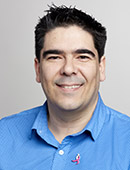
Jose Javier Bravo-Cordero, PhD
About Me
Dr. Bravo-Cordero was trained as a cell biologist and molecular biologist. He earned his bachelor’s degree at Autonoma University of Madrid (Spain) and his PhD in Cancer Biology at the Spanish National Cancer Institute (CNIO, Spain) working on mechanisms of tumor cell invasion in 3D collagen matrices by using high-resolution imaging.
During his postdoctoral training, he extended his expertise in breast cancer metastasis by applying unique imaging technologies such as FRET microscopy and intravital imaging at the Albert Einstein College of Medicine in New York. He studied the spatiotemporal activation of RhoGTPases during invasion by using a series of imaging tools (FRET biosensors) to visualize GTPase activation in real time in living cells.
Dr. Bravo-Cordero's expertise ranges from microscopy (FRET microscopy, in vivo imaging) to cell biology and mouse models. His laboratory is investigating the mechanisms of tumor cell dissemination and metastasis of breast cancer by applying high-resolution imaging techniques.
In September 2015, he joined the Division of Hematology and Oncology, the Tisch Cancer Institute and the Microscopy CORE at Icahn School of Medicine at Mount Sinai as an assistant professor.
Visit the Bravo-Cordero Laboratory here: https://labs.icahn.mssm.edu/bravo-cordero-lab/
Dr. Bravo-Cordero is on Twitter at @BravoCorderoLab
Language
English
Position
ASSOCIATE PROFESSOR | Medicine, Hematology and Medical Oncology
Research Topics
Cancer, Cell Adhesion, Cell Biology, Cell Motility, Chemokines, Chemotaxis, Cytoskeleton, Extracellular Matrix, Image Analysis, Imaging, Macrophage, Metastasis, Migration, Molecular Biology, Two-Photon Imaging
Multi-Disciplinary Training Areas
Cancer Biology [CAB], Development Regeneration and Stem Cells [DRS], Genetics and Genomic Sciences [GGS]
Publications
Selected Publications
- Cholesterol dysregulation in APOE4 astrocytes promotes α-synuclein pathology in miBrains. Louise A. Mesentier-Louro, Camille Goldman, Sebastian Gaese, Alice Buonfiglioli, Dimitrios Kyriakis, Ashley Harlock, Alain Ndayisaba, Emily R. Sartori, Abigail Uchitelev, John F. Fullard, Evelyn Hennigan, Donghoon Lee, Braxton R. Schuldt, Rikki B. Rooklin, Jonathan Barra, Jose Javier Bravo-Cordero, Panos Roussos, Vikram Khurana, Joel W. Blanchard. Cell Stem Cell
- The sleeping threat: targeting cancer dormancy to transform metastasis therapy. Julio A. Aguirre-Ghiso, Jose Javier Bravo-Cordero, Wenjun Guo, Gregoire Lauvau, Maria Soledad Sosa. Nature Reviews Cancer
- A multimodal adaptive optical microscope for in vivo imaging from molecules to organisms. Tian Ming Fu, Gaoxiang Liu, Daniel E. Milkie, Xiongtao Ruan, Frederik Görlitz, Yu Shi, Valentina Ferro, Nikita S. Divekar, Wei Wang, Harrison M. York, Velat Kilic, Matthew Mueller, Yajie Liang, Timothy A. Daugird, Maria Jose Gacha-Garay, Kathryn A. Larkin, Rebecca C. Adikes, Nathanael Harrison, Cyna Shirazinejad, Samara Williams, Jamison L. Nourse, Shu Hsien Sheu, Liang Gao, Tongchao Li, Chandrani Mondal, Kemal Achour, Wilmene Hercule, Daniel R. Stabley, Kevin Emmerich, Peng Dong, David G. Drubin, Zhe J. Liu, Jeff S. Mumm, Minoru Koyama, Alison N. Killilea, Jose Javier Bravo-Cordero, C. Dirk Keene, Liqun Luo, Tomas Kirchhausen, Medha M. Pathak, Senthil Arumugam, James K. Nuñez, Ruixuan Gao, David Q. Matus, Benjamin L. Martin, Ian A. Swinburne, Eric Betzig, Wesley R. Legant, Srigokul Upadhyayula. Nature Methods
Industry Relationships
Physicians and scientists on the faculty of the Icahn School of Medicine at Mount Sinai often interact with pharmaceutical, device, biotechnology companies, and other outside entities to improve patient care, develop new therapies and achieve scientific breakthroughs. In order to promote an ethical and transparent environment for conducting research, providing clinical care and teaching, Mount Sinai requires that salaried faculty inform the School of their outside financial relationships.
Dr. Bravo-Cordero has not yet completed reporting of industry relationships or has no industry relationships to report.
Mount Sinai’s faculty policies relating to faculty collaboration with industry are posted on our website. Patients may wish to ask their physician about the activities they perform for companies.