
Publications:70
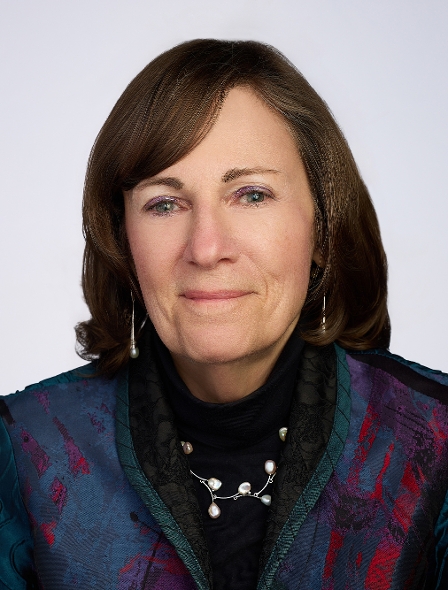
Margaret H Baron, MD, PhD
About Me
Margaret H. Baron, MD PhD, is Irene and Arthur M. Fishberg Professor of Medicine; Senior Associate Dean for Basic and Clinical Research Training, Director of the Office of Physician-Scientist Research Training, and former Director of the MD-PhD Program (now MSTP Director Emerita); former Program Director of Mount Sinai's NIH-funded T32 Medical Scientist Training Program (MSTP); and a member of the Tisch Cancer Institute (TCI) and Institute for Regenerative Medicine. Dr. Baron is an established scientist who has over 35 years of continuous, independent NIH-sponsored research funding in hematopoiesis and gene regulation and a publication record spanning protein biochemistry, virology, cell biology, developmental biology, and stem cell biology. She is known for her work on the plasticity of the differentiated state, globin gene regulation, and developmental hematopoiesis.
Dr. Baron is a graduate of the Harvard-M.I.T. Program in Health Sciences and Technology (H.S.T.) and holds degrees from Harvard (A.B.), Harvard Medical School (M.D.) and M.I.T. (Ph.D.). She trained in the laboratories of the late David Baltimore (Ph.D. thesis) and Tom Maniatis (postdoc). Her first independent faculty position was in The Biological Laboratories at Harvard University, where she was an assistant and then associate professor before moving to a tenured position at Mount Sinai in 1997. She served for 18 months (2006-2007) as Interim Co-Director of Mount Sinai’s Stem Cell Institute, Director of Hematology Research (six years), and Director of Research in Hematology and Blood Disorders (two years) for the Division of Hematology and Medical Oncology of the TCI, and Department of Medicine.
Dr. Baron is a dedicated educator, having developed and directed courses for undergraduates, PhD and MD/PhD students at Harvard and Mount Sinai. She was co-founder and former co-Director for the Developmental and Stem Cell Biology (DSCB, now DRS) Multidisciplinary Training Area (MTA) for PhD and MD/PhD students as well as a former co-director of the former Mechanisms of Disease and Therapies Multidisciplinary Training Area (MTA). She co-founded and co-directs an advanced graduate course in Stem Cell Biology and Regenerative Medicine.
In her current role as Senior Associate Dean for Basic and Clinical Research Training, she oversees the development of activities and initiatives to support resident and clinical fellow physician-scientists and to foster the physician-scientist community at Mount Sinai.
Language
English
Position
SENIOR ASSOCIATE DEAN FOR BASIC AND CLINICAL RESEARCH TRAINING, PROFESSOR | Medicine, Hematology and Medical Oncology, PROFESSOR | Stem Cell Biology And Regenerative Medicine, PROFESSOR | Graduate Education, PROFESSOR | Oncological Sciences
Research Topics
Cellular Differentiation, Cytokines, Developmental Biology, Embryology, Endothelial Cells, Gene Regulation, Growth Factors and Receptors, Hematopoiesis, Imaging, Knockout Mice, Molecular Biology, Nucleus, Organogenesis, Protein Complexes, Regeneration, Signal Transduction, Stem Cells, Transcription Factors, Transcriptional Activation and Repression, Transgenic Mice, Transplantation, Vascular Development
Multi-Disciplinary Training Areas
Cancer Biology [CAB], Development Regeneration and Stem Cells [DRS]
Education
AB Summa cum laude, Harvard University
PhD, Massachusetts Institute of Technology
MD, Harvard Medical School (Harvard-M.I.T. Program in Health Sciences and Technology)
Residency, Internal Medicine, Massachusetts General Hospital
Postdoc, Harvard University
Awards
2012-13
Fellow
Executive Leadership in Academic Medicine (ELAM) program
2011
Elected Member
Association of American Physicians (AAP)
2004
Research Recognition Award
American Cancer Society
2001
Irene and Dr. Arthur M. Fishberg Professor of Medicine
Mount Sinai School of Medicine
2000
Elected Member
American Society for Clinical Investigation (ASCI)
1989-92
Basil O'Connor Scholar Award
March of Dimes
1987-94
Scholar Award
Lucille P. Markey Charitable Trust Scholar Award
Research
Our lab is interested in molecular mechanisms of hematopoietic stem and progenitor cell fate specification and differentiation using mouse and human primary cell and ES cell models and animals. We have a longstanding interest in developmental hematopoiesis in mammals. One focus of the lab is to study signaling pathways in embryonic hematopoiesis and erythropoiesis (red blood cells) in the mouse. A second focus is on definitive (adult type) hematopoietic and erythroid progenitor development (mouse fetal liver or bone marrow, human progenitors from peripheral blood or bone marrow). We are developing a high throughput screen for regulators of erythroid progenitors as well as later stages of maturation, including enucleation, and are targeting specific ligand-activated transcription factor pathways for detailed analysis. Experimental approaches include classical cell and molecular biology techniques, small interfering RNA viral technologies, RNA profiling and RNAseq, computational analyses, chromatin immunoprecipitation (ChIP), and genetic manipulation of mice. This work has the potential to reveal new approaches for regulating erythropoiesis and to suggest options for the development of novel therapies to improve the body’s ability to rapidly replenish its red blood cells. They may also lead to the discovery of new targets in progenitors that could be exploited to develop methods for more efficient production ex vivo of red blood cells for transfusion.
Publications
Selected Publications
- A community-informed toolkit for physician-scientist competencies and milestones: bridging the worlds of medicine and research. Lourdes Estrada, Justin Baca, Margaret Baron, Lawrence Brass, Clarissa Craft, Jose Cavazos, Aimee Kao, Mary-Claire Roghmann, Jodi Yellin, Wayne McCormack. Academic Medicine
- A study of MD-PhD pre-health advising identifies challenges to building a robust MD-PhD applicant pool. Amara L. Plaza-Jennings, Christie B. Ryba, Jessica Tan, Jennifer E.L. Diaz, Grace E. Mosley, Talia H. Swartz, Margaret H. Baron, Robert Fallar, Valerie Parkas. JCI insight
- Generation of Transgenic Fluorescent Reporter Lines for Studying Hematopoietic Development in the Mouse. Jeffrey Barminko, Andrei M. Vacaru, Margaret H. Baron.
Industry Relationships
Physicians and scientists on the faculty of the Icahn School of Medicine at Mount Sinai often interact with pharmaceutical, device, biotechnology companies, and other outside entities to improve patient care, develop new therapies and achieve scientific breakthroughs. In order to promote an ethical and transparent environment for conducting research, providing clinical care and teaching, Mount Sinai requires that salaried faculty inform the School of their outside financial relationships.
Dr. Baron has not yet completed reporting of industry relationships or has no industry relationships to report.
Mount Sinai’s faculty policies relating to faculty collaboration with industry are posted on our website. Patients may wish to ask their physician about the activities they perform for companies.