
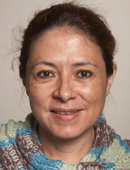
Olga Camacho-Vanegas, PhD
About Me
Olga Camacho-Vanegas, Ph.D.
Assistant Professor
Department of Genetics and Genomic Sciences
The Mount Sinai School of Medicine
1425 Madison Avenue , Room 14-26D
New York, New York 10029-6574
Phone: 212-241-6771
Fax: 212-241-5703
E-mail: olga.camacho@mssm.edu
Assistant Professor
Department of Genetics and Genomic Sciences
The Mount Sinai School of Medicine
1425 Madison Avenue , Room 14-26D
New York, New York 10029-6574
Phone: 212-241-6771
Fax: 212-241-5703
E-mail: olga.camacho@mssm.edu
Language
English
Position
ASSISTANT PROFESSOR | Genetics and Genomic Sciences
Education
PhD, University of Rome
Research
Our Laboratory involve in a number of translational research projects. In particular we are focused on human gene discovery projects with a particular interest in tumor suppressor genes, the generation of animal model for understanding the biological role of these genes in cancer and ultimately the generation of novel therapeutic targets to cure cancer.
Among the projects running in our laboratory, I am leading the project: Linkage analysis and gene descovery for a novel bone dysplasia/cancer syndrome linked to chromosome 9p21-22:DMS-MFH (Diaphyseal medullary stenosis (sclerosis) with bone malignancy (malignant fibrous histiocytoma): Hardcastle syndrome, Malignant fibromatosis)". Throught linkage analysis, we have narrow the disease region to 1.6 Mb and have a identified a very interesting candidate gene. At present, we are in the process to demostrate the discovery a "new tumor suppressor gene". The use of in vivo and in vitro experimental strategies will help us to establish the function of the novel gene and to define the underlying disease mechanisms.
Another project in which I am actively participating is aimed to define the role and the molecular mechanisms by which of the Kruppel-like factor (KLF6) tumor suppressor gene and its KLF6-SV1 splice variant in human cancer.
Among the projects running in our laboratory, I am leading the project: Linkage analysis and gene descovery for a novel bone dysplasia/cancer syndrome linked to chromosome 9p21-22:DMS-MFH (Diaphyseal medullary stenosis (sclerosis) with bone malignancy (malignant fibrous histiocytoma): Hardcastle syndrome, Malignant fibromatosis)". Throught linkage analysis, we have narrow the disease region to 1.6 Mb and have a identified a very interesting candidate gene. At present, we are in the process to demostrate the discovery a "new tumor suppressor gene". The use of in vivo and in vitro experimental strategies will help us to establish the function of the novel gene and to define the underlying disease mechanisms.
Another project in which I am actively participating is aimed to define the role and the molecular mechanisms by which of the Kruppel-like factor (KLF6) tumor suppressor gene and its KLF6-SV1 splice variant in human cancer.