
Publications:54
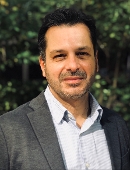
Poulikos Poulikakos, PhD
About Me
Poulikos I. Poulikakos, PhD, is Professor of Oncological Sciences at the Icahn School of Medicine at Mount Sinai and Co-Leader of the Cancer Mechanisms Research Program at the Mount Sinai Tisch Cancer Center. In this role, Dr. Poulikakos promotes research on the oncogenic signaling mechanisms that determine how tumors respond to and resist targeted therapies. He helps connect basic, translational, and clinical investigators to turn these mechanisms into more effective cancer treatments.
Dr. Poulikakos’s laboratory studies the regulation of oncogenic RAS, BRAF and CDK4/6 signaling and the mechanisms of drug action and of adaptive and acquired resistance to targeted therapies in RAS/MAPK- and CDK-driven cancers. The lab exploits this mechanistic understanding through conformation-selective inhibitors, induced-proximity pharmacology (molecular glues, PROTACs) and rational combinations, to design better cancer therapies. Because oncogenic signaling is dysregulated across many tumor types, his interests span targeted therapies for melanoma, multiple myeloma, and lung, colorectal, pancreatic and breast cancers, as well as targeted approaches that enhance anti-tumor immunity.
At the Icahn School of Medicine at Mount Sinai, Dr. Poulikakos teaches graduate courses on cancer biology and therapeutics and serves on PhD thesis committees. He is a standing member of the Mechanisms of Cancer Therapeutics A (MCTA) study section of the NIH Center for Scientific Review, and a standing reviewer for cancer research foundation grants, including the Melanoma Research Alliance and the Melanoma Research Foundation.
Visit the Poulikakos Laboratory
Language
English
Position
PROFESSOR | Oncological Sciences
Research Topics
Anti-Tumor Therapy, Biochemistry, Biomedical Sciences, Cancer, Cell Biology, Cell Cycle, Drug Design and Discovery, Drug Resistance, Oncogenes, Personalized Medicine, Phosphorylation, Protein Degradation, Protein Kinases, Protein Phosphatases, Signal Transduction, Translational Research, Tumor Suppressor Genes
Education
Ph.D., University of Athens, School of Biology
, Fox Chase Cancer Center
, Memorial Sloan-Kettering Cancer Center
Awards
Research Career Development Award
Dermatology Foundation
Unraveling mechanistic requirements for RAF dimerization, catalytic activation and response to kinase inhibitors
Tisch Cancer Institute Developmental Award
Identification of effective therapeutic strategies against RAF-inhibitor resistant melanoma
The Harry J. Lloyd Charitable Trust
Molecular Determinants of Tumor Dependence on ERK Signaling
CY14 Developmental Research Pilot Project Program
RSK Kinase as a mediator of oncogenic ERK signaling and a novel therapeutic Target in Melanoma
TCI Young Scientist Cancer Research Award
Research
The success of targeted therapies depends on effective suppression of oncogenic signaling in tumors at doses tolerated by normal tissues. In the Poulikakos lab, we study the mechanisms that widen this window, identifying tumor-normal signaling and state asymmetries beyond mutation selectivity. These asymmetries can be exploited with new pharmacology, including conformation-selective inhibitors and induced-proximity approaches such as molecular glues and PROTACs, for tumor-selective inhibition. We further study how tumors escape targeted therapies, and use this understanding to design more effective treatments for RAS-, BRAF- and CDK-driven cancers.
1. Mechanisms of Drug Action and Tumor-Selective Pathway InhibitionWe define the conformational, structural and kinetic determinants of targeted inhibitor action, and the tumor-normal asymmetries that set their therapeutic index. Our discovery of RAF inhibitor-induced RAF dimerization and transactivation established that RAS activity and RAF dimer state determine both the tumor selectivity and the toxicity of first-generation RAF inhibitors (Nature, 2010), explaining their success in BRAF-mutant melanoma and other cancers, and predicting RAF dimerization as the predominant mechanism of resistance to these drugs.
We subsequently discovered the structural basis of dimer selectivity of RAF inhibitors and developed an integrated model of RAF inhibitor action predicting their biochemical properties and their clinical activity based on tumor context (Cancer Cell, 2016). These studies guided the preclinical and clinical development of next-generation RAF inhibitors. More recently, we identified molecular determinants of antitumor potency and predicted therapeutic window of paralog- and state-selective RAS inhibitors (Molecular Cancer Research, 2026) and identified binding kinetics as a source of tumor-selective MAPK suppression by a novel RAF inhibitor in RAS-mutant cancers (Science, in press).
2. Adaptive and Acquired Resistance to Targeted TherapiesWe study the mechanisms by which RAS-mutant and BRAF-mutant tumors escape pathway inhibition, including feedback reactivation and alternative signaling complexes. We identified aberrantly spliced BRAF(V600E) dimers as a mechanism of acquired RAF inhibitor resistance in patients (Nature, 2011). We showed that SHP2 drives adaptive resistance to MAPK pathway inhibition in molecularly defined tumor subsets, and defined the contexts in which targeting SHP2 would be most effective (Cell Reports, 2019).
We further exploited allosteric properties of RAF and MEK inhibitors to design tumor-selective and effective inhibitor combinations against therapy-resistant BRAF-driven tumors (Cancer Discovery, 2021) and identified a previously unrecognized CDK6 conformational state that drives tumor insensitivity to CDK4/6 inhibitors and represents a new therapeutic target (Nature Cancer, 2021).
3. New Pharmacology for Tumor-Selective InhibitionWe identify mechanistic sources of therapeutic index that can be exploited using new pharmacologic modalities. We combine conformation-selective inhibitors, rational drug combinations and induced-proximity approaches to achieve tumor-selective suppression of oncogenic signaling.
We identified a difference in RAF conformational state between RAS-mutant and normal cells that can be exploited by conformation-selective RAF inhibitors. Combining such inhibitors with a RAF/MEK molecular glue, which spatially modulates RAF, enabled full-dose combination and potent RAS-mutant tumor-selective MAPK and growth inhibition (Cancer Discovery, 2026). We further developed bifunctional CDK4/6 degraders (PROTACs) that served both as mechanistic tools and as next-generation therapeutic prototypes (Nature Cancer, 2021).
Lab MembersPostdoctoral Fellows: Bijaya Gaire, PhD; Mathieu Desaunay, PhD; Ziyue Kou, PhD
Graduate Student: Beau Baars
Visit the Poulikakos Laboratory
Publications
Selected Publications
- The past, present, and future treatment of BRAF<sup>V600</sup>-mutant metastatic colorectal cancer: A comprehensive review. Iris Dirven, Celina Ang, Cleo Bertels, Koen Kortbeek, Amy de Haar-Holleman, Marieke Vollebergh, Poulikos Poulikakos, Bart Neyns. Cancer
- Addendum: RAF/MEK/extracellular signal-related kinase pathway suppresses dendritic cell migration and traps dendritic cells in Langerhans cell histiocytosis lesions. Brandon Hogstad, Marie Luise Berres, Rikhia Chakraborty, Jun Tang, Camille Bigenwald, Madhavika Serasinghe, Karen Phaik Har Lim, Howard Lin, Tsz Kwong Man, Romain Remark, Samantha Baxter, Veronika Kana, Stefan Jordan, Zoi Karoulia, Wing Hong Kwan, Marylene Leboeuf, Elisa Brandt, Helene Salmon, Kenneth McClain, Poulikos Poulikakos, Jerry Chipuk, Willem J.M. Mulder, Carl E. Allen, Miriam Merad. Journal of Experimental Medicine
- RAS Mutation–Specific Responses to Paralog-and State-Selective RAS Inhibitors. Beau Baars, Ana Orive-Ramos, Matthew J. Emmett, Bijaya Gaire, Mathieu Desaunay, Ziyue Kou, Guangyan Li, Christos Adamopoulos, Stuart A. Aaronson, Shaomeng Wang, William R. Sellers, Tiphaine Martin, Evripidis Gavathiotis, Poulikos I. Poulikakos. Molecular Cancer Research
Industry Relationships
Physicians and scientists on the faculty of the Icahn School of Medicine at Mount Sinai often interact with pharmaceutical, device, biotechnology companies, and other outside entities to improve patient care, develop new therapies and achieve scientific breakthroughs. In order to promote an ethical and transparent environment for conducting research, providing clinical care and teaching, Mount Sinai requires that salaried faculty inform the School of their outside financial relationships.
Below are financial relationships with industry reported by Dr. Poulikakos during 2025 and/or 2026. Please note that this information may differ from information posted on corporate sites due to timing or classification differences.
Consulting or Other Professional Services
Examples include, but are not limited to, committee participation, data safety monitoring board (DSMB) membership- Guidepoint
- Nuvalent Inc
Mount Sinai’s faculty policies relating to faculty collaboration with industry are posted on our website. Patients may wish to ask their physician about the activities they perform for companies.