
Publications:97
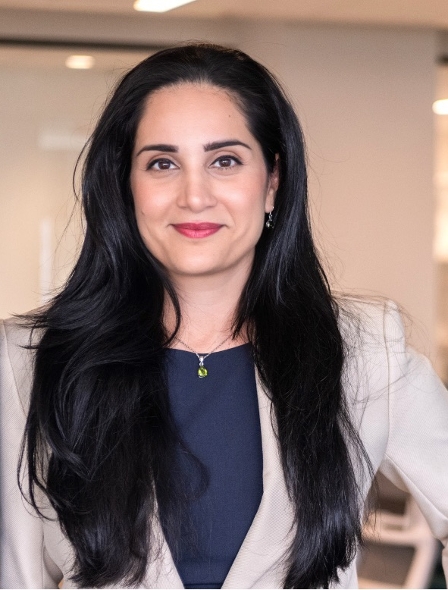
Priti Balchandani, PhD
About Me
Priti Balchandani, PhD, is a Professor of Diagnostic, Molecular and Interventional Radiology, Neuroscience and Psychiatry, and Endowed Professor of Engineering Medicine at the Icahn School of Medicine at Mount Sinai (ISMMS). She is the Director of the Advanced Neuroimaging Research Program (ANRP) and Associate Director of the BioMedical Engineering and Imaging Institute (BMEII). She is the Co-director of the Center for Engineering and Precision Medicine (CEPM), the first joint center between ISMMS and Rensselaer Polytechnic Institute (RPI), and also co-directs the Health Sciences Engineering PhD program, which provides specialized training in the field of Engineering Medicine. Her research has been focused on bridging gap between advanced electrical engineering techniques and medical imaging applications. She applies signals and systems principles to image the human brain in unprecedented detail and with new sources of signal and contrast. She develops novel MRI techniques to visualize detailed anatomy as well as vasculature, neuronal fiber tracts and metabolic characteristics in order to obtain a more complete understanding of the effects of disease on the brain. She has applied these methods to improveepilepsy treatment, guide skull base tumor surgery and study the biological mechanisms underlying psychiatric illness. Her work on overcoming some of the main limitations of operating at high magnetic fields has resulted in several innovative tools with wide applicability for human brain imaging and spectroscopy. These techniques are ultimately applied to improve diagnosis, treatment and surgical planning for a range of neurological diseases and disorders. She has served as PI on multiple NIH-funded projects focused on applying 7T imaging to help guide diagnosis and treatment of neurological diseases. Dr. Balchandani received her BASc in computer engineering at the University of Waterloo in Canada and her PhD in electrical engineering at Stanford University.
Language
English
Position
PROFESSOR | Diagnostic, Molecular and Interventional Radiology, PROFESSOR | Graduate Education, PROFESSOR | Psychiatry, PROFESSOR | Neuroscience, PROFESSOR | Artificial Intelligence and Human Health
Research Topics
Biomechanics/Bioengineering, Brain, Brain Imaging, Education, Epilepsy, Imaging, MRI, Magnetic Resonance Imaging, Mathematical Modeling of Biomedical Systems, Neural Networks, Neurobiology, Neuroscience
Multi-Disciplinary Training Areas
Artificial Intelligence and Emerging Technologies in Medicine [AIET], Disease Mechanisms and Therapeutics (DMT), Neuroscience [NEU]
Education
BASc, University of Waterloo
MS, Stanford University
PhD, Stanford University
Awards
2024
NIH Research Project Grant (R01)
National Institute of Neurological Disorders and Stroke
2023
NIH High Priority Short Term Award (R56)
National Institute of Aging
2022
NIH Exploratory/Developmental Grant (R21) Award
National Institute of Aging
2022
NIH High Priority Short Term Award (R56)
National Institute of Dental and Craniofacial Research
2021
NIH Exploratory/Developmental Grant (R21) Award
National Institute of Neurological Disorders and Stroke
2020
NIH Exploratory/Developmental Grant (R21) Award
National Institute of Aging
2019
NIH Research Project Grant (R01)
National Institute of Mental Health
2016
NIH Research Project Grant (R01)
National Cancer Institute
2016
NIH Research Project Grant (R01)
National Institute of Mental Health
2016
NIH Small Business Technology Transfer (STTR)
National Institute of Biomedical Imaging and Bioengineering
2011
NIH Pathway to Independence Award
National Institute of Neurological Disorders and Stroke
2010
Named Junior Fellow of International Society for Magnetic Resonance in Medicine (ISMRM)
2008
Young Investigators’ Award Finalist at ISMRM
Research
Dr. Balchandani’s primary research goal is to develop anatomic, spectroscopic and functional magnetic resonance (MR) imaging tools to elucidate changes in brain structure, metabolism and function in the presence of disease. Her work is focused on the application of signal processing principles to the development of novel radio frequency (RF) pulses and pulse sequences that maximize the information imparted by MR images. She has developed several techniques to harness the power of high-field MR magnets by overcoming physical and hardware limitations in order to visualize the human brain in unprecedented structural and metabolic detail. In addition, she is interested in obtaining a direct window into neuronal activation and function by improving current functional imaging techniques and exploiting the MR signal of nuclei other than hydrogen. Together, these techniques are applied to improve diagnosis, treatment and monitoring of neurological diseases and disorders as well as advance our understanding of the brain in the normal state.
Publications
Selected Publications
- Spatiotemporal asymmetries on brain energy landscape uncover system entrapment related to depression severity. B. Ülgen Kilic, Jenna Jubeir, Priti Balchandani, James W. Murrough, Laurel S. Morris, Yael Jacob. Nature Communications
- Stroke-induced gut microbiome dysbiosis accelerates Alzheimer’s disease progression. Chetan Aware, Carter Woods, Pavlo Khodakivskyi, Alok Kumar Dwivedi, Amitai Zuckerman, Maalavika Govindarajan, Kira Ivanich, Wenyan Yu, Jiankun Cui, Zezong Gu, Elena Goun, Aaron C. Ericsson, Ross Zafonte, Priti Balchandani, Ai Ling Lin. Journal of Cerebral Blood Flow and Metabolism
- “Mind the Gap”—enlarged perivascular spaces as a potential magnetic resonance imaging biomarker of impaired glymphatic clearance in brain disorders. Claudia F. Kirsch, Mackenzie Herb, Guarav Verma, Priti Balchandani. Frontiers in Cellular Neuroscience
Industry Relationships
Physicians and scientists on the faculty of the Icahn School of Medicine at Mount Sinai often interact with pharmaceutical, device, biotechnology companies, and other outside entities to improve patient care, develop new therapies and achieve scientific breakthroughs. In order to promote an ethical and transparent environment for conducting research, providing clinical care and teaching, Mount Sinai requires that salaried faculty inform the School of their outside financial relationships.
Below are financial relationships with industry reported by Dr. Balchandani during 2025 and/or 2026. Please note that this information may differ from information posted on corporate sites due to timing or classification differences.
Equity
(Stock or stock options valued at greater than 5% ownership of a publicly traded company or equity of any value in a privately held company)- RefleXion Medical
Mount Sinai’s faculty policies relating to faculty collaboration with industry are posted on our website. Patients may wish to ask their physician about the activities they perform for companies.