
Publications:157
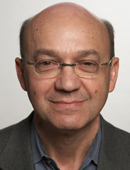
Roman Osman, PhD
About Me
Language
English
Position
PROFESSOR | Pharmacological Sciences, PROFESSOR | Graduate Education
Research Topics
Antigen Presentation, Apoptosis/Cell Death, Autoimmunity, Biophysics, Cancer, Computational Biology, Computer Simulation, DNA Repair, Diabetes, Drug Design and Discovery, Enzymology, Gene Regulation, Mathematical and Computational Biology, Membrane Proteins/Channels, Post-Transcriptional Processing, Proteases, Protein Complexes, Protein Folding, Protein Structure/Function, Receptors, Signal Transduction, Structural Biology, T Cells, Theoretical Biophysics, Thermodynamics, Thyroid
Multi-Disciplinary Training Areas
Artificial Intelligence and Emerging Technologies in Medicine [AIET], Cancer Biology [CAB], Disease Mechanisms and Therapeutics (DMT)
Education
B.S., Hebrew University
M.S., Graduate School of the Hebrew University
Ph.D., Graduate School of Tel-Aviv University
, Vanderbilt University
Research
We have developed a
theoretical and computational approach to evaluate energetics and dynamics of
waters trapped inside proteins. With a visiting student from the University of
Barcelona, Jose Carlos Gomez, and Leonardo Pardo we have defined the properties of the network of
waters in GPCRs and their ability to allosterically transfer information
between two isolated binding pockets in the extra- and intracellular sites. The
thermodynamic signature of these waters is of major importance in the
regulation of binding and the dynamic properties of the H-bond network are
important in modulating biological function. We are applying these theoretical
approaches to study the role of waters in GPCR activation, protein-protein
interaction and protein-small molecule complexes.
Publications
Selected Publications
- Melanoma antigen genes (MAGE); novel functional targets in multiple myeloma. Anna Huo Chang Mei, Alessandro Laganà, Roman Osman, Hearn Jay Cho. Seminars in Hematology
- Substrate binding and inhibition of the anion exchanger 1 transporter. Michael J. Capper, Shifan Yang, Alexander C. Stone, Sezen Vatansever, Gregory Zilberg, Yamuna Kalyani Mathiharan, Raul Habib, Keino Hutchinson, Yihan Zhao, Avner Schlessinger, Mihaly Mezei, Roman Osman, Bin Zhang, Daniel Wacker. Nature Structural and Molecular Biology
- Effective Inhibition of Thyroid Antigen Presentation Using Retro-Inverso Peptides in Experimental Autoimmune Thyroiditis: A Pathway Toward Immune Therapies of Thyroid Autoimmunity. Cheuk Wun Li, Roman Osman, Francesca Menconi, Hanxi Hou, Clyde Schechter, Aizhan Kozhakhmetova, Yaron Tomer. Thyroid
Industry Relationships
Physicians and scientists on the faculty of the Icahn School of Medicine at Mount Sinai often interact with pharmaceutical, device, biotechnology companies, and other outside entities to improve patient care, develop new therapies and achieve scientific breakthroughs. In order to promote an ethical and transparent environment for conducting research, providing clinical care and teaching, Mount Sinai requires that salaried faculty inform the School of their outside financial relationships.
Dr. Osman has not yet completed reporting of industry relationships or has no industry relationships to report.
Mount Sinai’s faculty policies relating to faculty collaboration with industry are posted on our website. Patients may wish to ask their physician about the activities they perform for companies.