
Publications:426
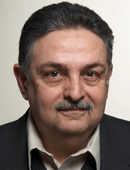
Vahram Haroutunian, PhD
About Me
Dr. Haroutunian joined the faculty at The Mount Sinai School of Medicine in the summer of 1982 and is Professor of Psychiatry and Neuroscience. Dr. Haroutunian came to Mount Sinai after completing a postdoctoral training program at Princeton concentrating on research in development in aging. His research interests since joining the Mount Sinai faculty have centered on the neurobiology of Alzheimer’s disease, successful aging and schizophrenia. He directs the Mount Sinai NIH Neurobiobank and the Alzheimer’s Disease Research Center Neuropathology Core. Dr. Haroutunian is Principal Investigator on over 10 different NIH grants and contracts. He is also the Associate Director for Research for the Veterans Administration Mental Illness Research and Education Clinical Center. Dr. Haroutunian’s research interests include gene and protein expression at the single cell level in health and disease; development of novel approaches for the study of the human brain, including laser capture microdissection, digital neuropathology, application of artificial intelligence to reveal pathological and neuroanatomical features not immediately appreciated by the human eye. Dr. Haroutunian’s lab collaborates extensively the laboratories of Dr. Panagiotis Roussos, Dr. Bin Zhang, and Dr. Pavel Katsel.
Language
English
Position
PROFESSOR EMERITUS | Psychiatry
Research Topics
Aging, Alzheimer's Disease, Gene Expressions, Myelination, Neurotransmitters, Post-Transcriptional Processing, Prefrontal Cortex, Psychiatry, RNA, Schizophrenia
Multi-Disciplinary Training Areas
Neuroscience [NEU]
Education
Ph.D., Kent State University
, Princeton University
Publications
Selected Publications
- Efficient differential expression analysis of large-scale single-cell transcriptomics data using Dreamlet. Gabriel E. Hoffman, Donghoon Lee, Jaroslav Bendl, N. M. Prashant, Aram Hong, Clara Casey, Marcela Alvia, Zhiping Shao, Stathis Argyriou, Karen Therrien, Sanan Venkatesh, Georgios Voloudakis, Vahram Haroutunian, John F. Fullard, Panos Roussos. Nature Communications
- SECmeres outperform extracellular vesicles as potential blood RNA biomarkers for Alzheimer’s disease. Edgar Gonzalez-Kozlova, Swapnil Tichkule, Yohei Nose, Tzu Yi Chen, Eduard Reznik, Juliet V. Santiago, Anish Korrapati, Taliah Soleymani, Roman Kosoy, Igor Figueiredo, Donghoon Lee, Gabriel E. Hoffman, Natasha Kyprianou, Ronald E. Gordon, Carlos Cordon-Cardo, Srikant Rangaraju, Nicholas T. Seyfried, Vahram Haroutunian, John F. Fullard, Panos Roussos, Navneet Dogra. Nature Communications
- Lifespan single-cell transcriptomic atlas of the human prefrontal cortex. Hui Yang, Tereza Clarence, Madeline R. Scott, Xinyi Wang, Prashant N M, Milos Pjanic, Sanan Venkatesh, Aram Hong, Clara Casey, Sarah R. Murphy, Zhiping Shao, Marcela Alvia, Stathis Argyriou, Alexander Kawah Yu, Nadejda M. Tsankova, Pavan K. Auluck, Stefano Marenco, Vahram Haroutunian, Georgios Voloudakis, Jaroslav Bendl, Colleen A. McClung, Donghoon Lee, John F. Fullard, Gabriel E. Hoffman, Kiran Girdhar, Panos Roussos. Nature
Industry Relationships
Physicians and scientists on the faculty of the Icahn School of Medicine at Mount Sinai often interact with pharmaceutical, device, biotechnology companies, and other outside entities to improve patient care, develop new therapies and achieve scientific breakthroughs. In order to promote an ethical and transparent environment for conducting research, providing clinical care and teaching, Mount Sinai requires that salaried faculty inform the School of their outside financial relationships.
Dr. Haroutunian has not yet completed reporting of industry relationships or has no industry relationships to report.
Mount Sinai’s faculty policies relating to faculty collaboration with industry are posted on our website. Patients may wish to ask their physician about the activities they perform for companies.