
Publications:101
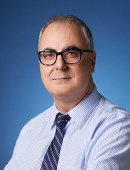
Yiannis Ioannou, PhD
About Me
Dr Ioannou is a Professor of Genetics and Genomic Sciences. He is an internationally recognized molecular geneticist and cell biologist and an expert on the biology, function and diseases of the endosomal/lysosomal system and in particular disorders that affect the central nervous system. He has more than 25 years of experience in drug development for rare diseases and he is the co-developer of the FDA-approved enzyme replacement therapy for Fabry’s disease.
Dr Ioannou is also a co-founder of Dual Therapeutics a highly innovative R&D company focused on the development of small molecule activators of tumor suppressor proteins with anti-tumor activity.
Dr Ioannou has also recently founded Amathus Therapeutics and is currently serving as President of the Scientific Advisory Board. Amathus Therapeutics is pursuing the clinical development of novel compounds that show efficacy in treating multiple lysosomal neurodegenerative diseases including Niemann-Pick C and Parkinson’s diseases.
Professor, Department of Genetics and Genomic Sciences
Training Area(s): GGS*, MDT, MCBD
Lab Location: East Building Rm 14-52 Lab, 14-70A Office
Phone: (212) 659-6720
Email: yiannis.ioannou@mssm.edu
Language
English
Position
PROFESSOR | Genetics and Genomic Sciences
Research Topics
Alzheimer's Disease, Apoptosis/Cell Death, Atherosclerosis, Brain, Cardiovascular, Caveoloe, Diabetes, Drug Design and Discovery, Gene Regulation, Genetics, Human Genetics and Genetic Disorders, Intracellular Transport, Lipid Signaling, Lysosomal Storage Diseases, Lysosomes/endosome, Mass Spectrometry, Membrane Proteins/Channels, Membranes, Mental Retardation, Neuro-degeneration/protection, Obesity, Protein Complexes, Protein Degradation, Protein Kinases, Protein Phosphatases, Protein Structure/Function, Protein Trafficking & Sorting, Proteomics, RNA, Transporters
Multi-Disciplinary Training Areas
Genetics and Genomic Sciences [GGS]
Video
Education
B.A., Baruch College, CUNY
Ph.D., Mount Sinai School of Medicine
Research
Specific Clinical/Research Interest: Molecular genetics
Summary of Research Studies:
Our lab is involved in a number of projects that center on the biology, function and diseases of the endosomal/lysosomal (E/L) system. In addition, we are developing methods to treat lysosomal diseases via enzyme and gene therapy approaches. See our website for details. Some brief examples of our work are given below: Subcellular Cholesterol/lipid Transport. Although the intercellular transport of cholesterol from the liver to peripheral tissues has been intensively studied, little is known about its egress from the E/L system, its intracellular transport and the proteins involved in this process. The existence of such proteins is highlighted by the autosomal recessive disorders, Niemann-Pick C (NPC) disease, in which cholesterol accumulates in lysosomes and leads to progressive neurodegeneration and Tangier disease in which cholesterol efflux at the plasma membrane is defective. Our overall objective is to identify and characterize the various components of the intracellular cholesterol and lipid transport machinery and determine their function and interactions. Proteomics of the E/L system. Cell Proliferation and Apoptosis: It is becoming clear that the lysosome has a greater role in cellular processes than was originally proposed. Our studies focus on the isolation and purification of intact endosomes and lysosomes. These organelles are then characterized for their membrane composition to identify novel, membrane proteins. We have established a novel method for the isolation and characterization of endosomes and lysosomes. A long-term goal is to identify all the components of the endosomal/lysosomal apparatus using 2D electrophoresis and tandem mass spectroscopy. Therapy for Diseases that Affect the CNS. Effective gene therapy strategies for the treatment of human disease still remain highly experimental due to difficulties encountered in the actual application of many gene therapy schemes. Thus, we are developing novel approaches to address these limitations. Our strategies focus on "Bypass Therapy" an approach aiming at stimulating alternate pathways to bypass a cellular block caused by a specific gene defect.
Publications
Selected Publications
- Efficacy and safety of the CD40 ligand inhibitor dapirolizumab pegol in systemic lupus erythematosus (PHOENYCS GO): a randomised, double-blind, placebo-controlled, phase 3 trial. Megan E.B. Clowse, David A. Isenberg, Joan T. Merrill, Thomas Dörner, Michelle Petri, Edward M. Vital, Eric F. Morand, Zahi Touma, Anca D. Askanase, Yiannis Ioannou, Stephen Brookes, Janine Gaiha-Rohrbach, E. Dietlind Koch, Nour Zibian, Christophe Martin, Teri Jimenez, Annette Nelde, Christian Stach. The Lancet
- Identification of urinary bacterial genes as biomarkers for non-invasive diagnosis of renal lupus. Virginia Pérez-Carrasco, Ana Soriano-Lerma, Cinzia Guzzi, María Luisa García-Martín, María J. Tello, Ángel Linde-Rodríguez, Victoria Sánchez-Martín, Matilde Ortiz-González, Tania Gomes Anjos, Marta Alarcón Riquelme, Jacqueline Marovac, Chris Chamberlain, Yiannis Ioannou, Héctor Navarro-Linares, Rocío Aguilar-Quesada, Antonio López-Berrio, Manuel Rodriguez Maresca, Silvia Thiel, Velia Gerl, Falk Hiepe, Gabriella Kádár, Sonja Dulic, Márta Bocskai, Magdolna Deák, Attila Balog, Laszló Kovács, Donatienne Wynar, Aleksandra Zuber, Carlo Chizzolini, Carolina Artusi, Tommaso Schioppo, Maria Gerosa, Pier Luigi Meroni, Isabel Díaz Quintero, Enrique de Ramon, Inmaculada Jiménez Moleón, Enrique Raya, María Concepción Fernández Roldán, Norberto Ortego, Yolanda Jiménez Gómez, Mª Carmen Castro-Villegas, Alejandro Escudero-Contreras, Mª Angeles Aguirre-Zamorano, Rafaela Ortega-Castro, Eduardo Collantes, Michaela Lehner, Michael Zauner, Georg Stummvoll, Niklas Baerlecken, Torsten Witte. Biomarker Research
- A Genome-Wide Association Study Suggests New Susceptibility Loci for Primary Antiphospholipid Syndrome. Desiré Casares-Marfil, Manuel Martínez-Bueno, Maria Orietta Borghi, Guillermo Pons-Estel, Lorenzo Beretta, Barbara Vigone, Jacques Olivier Pers, Alain Saraux, Valérie Devauchelle-Pensec, Divi Cornec, Sandrine Jousse-Joulin, Bernard Lauwerys, Julie Ducreux, Anne Lise Maudoux, Carlos Vasconcelos, Ana Tavares, Esmeralda Neves, Raquel Faria, Mariana Brandão, Ana Campar, António Marinho, Fátima Farinha, Isabel Almeida, Miguel Angel Gonzalez-Gay, Ricardo Blanco Alonso, Alfonso Corrales Martínez, Ricard Cervera, Ignasi Rodríguez-Pintó, Gerard Espinosa, Rik Lories, Ellen De Langhe, Nicolas Hunzelmann, Doreen Belz, Torsten Witte, Niklas Baerlecken, Georg Stummvoll, Michael Zauner, Michaela Lehner, Eduardo Collantes, Rafaela Ortega-Castro, Mª Angeles Aguirre-Zamorano, Alejandro Escudero-Contreras, Mª Carmen Castro-Villegas, Yolanda Jiménez Gómez, Norberto Ortego, María Concepción Fernández Roldán, Enrique Raya, Inmaculada Jiménez Moleón, Enrique de Ramon, Yiannis Ioannou. Arthritis and Rheumatology
Industry Relationships
Physicians and scientists on the faculty of the Icahn School of Medicine at Mount Sinai often interact with pharmaceutical, device, biotechnology companies, and other outside entities to improve patient care, develop new therapies and achieve scientific breakthroughs. In order to promote an ethical and transparent environment for conducting research, providing clinical care and teaching, Mount Sinai requires that salaried faculty inform the School of their outside financial relationships.
Dr. Ioannou has not yet completed reporting of industry relationships or has no industry relationships to report.
Mount Sinai’s faculty policies relating to faculty collaboration with industry are posted on our website. Patients may wish to ask their physician about the activities they perform for companies.